Urban Plan
La Roma Norte in Mexico City is a vibrant neighborhood with distinct areas that serve different purposes. The map highlights the busiest zones where most people work, the locations of schools, and the highly walkable streets that make the area accessible. Families tend to live near parks and playgrounds, offering safe spaces for children, while elderly residents are found in quieter, more peaceful sections. Key streets connect clusters of food stalls, creating lively hubs that bring the community together.
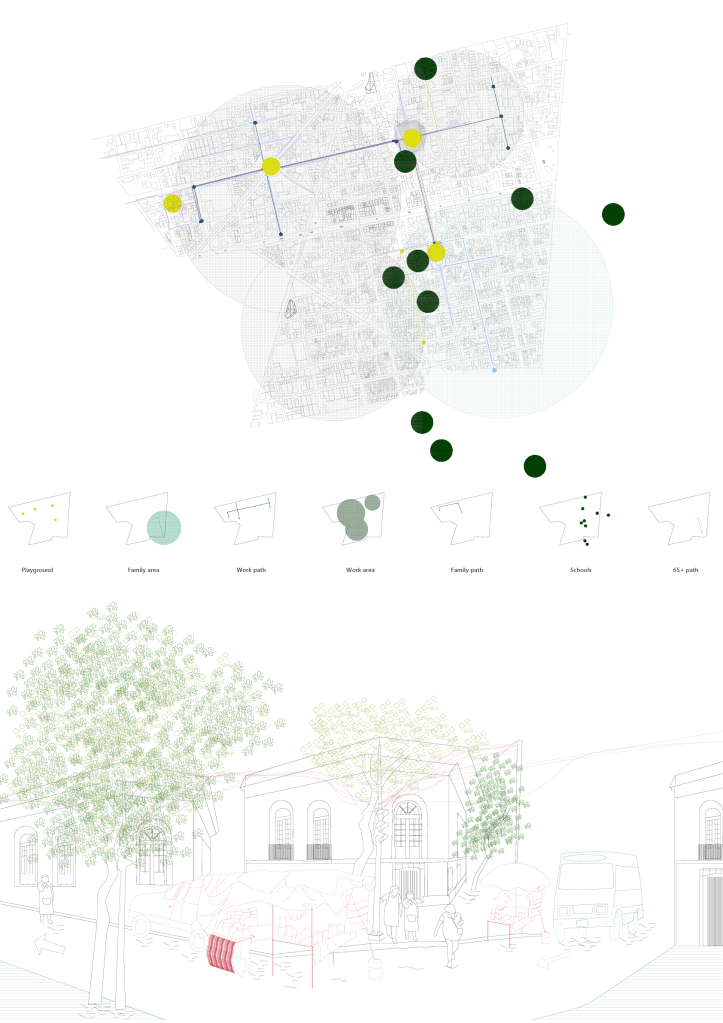
Urban root
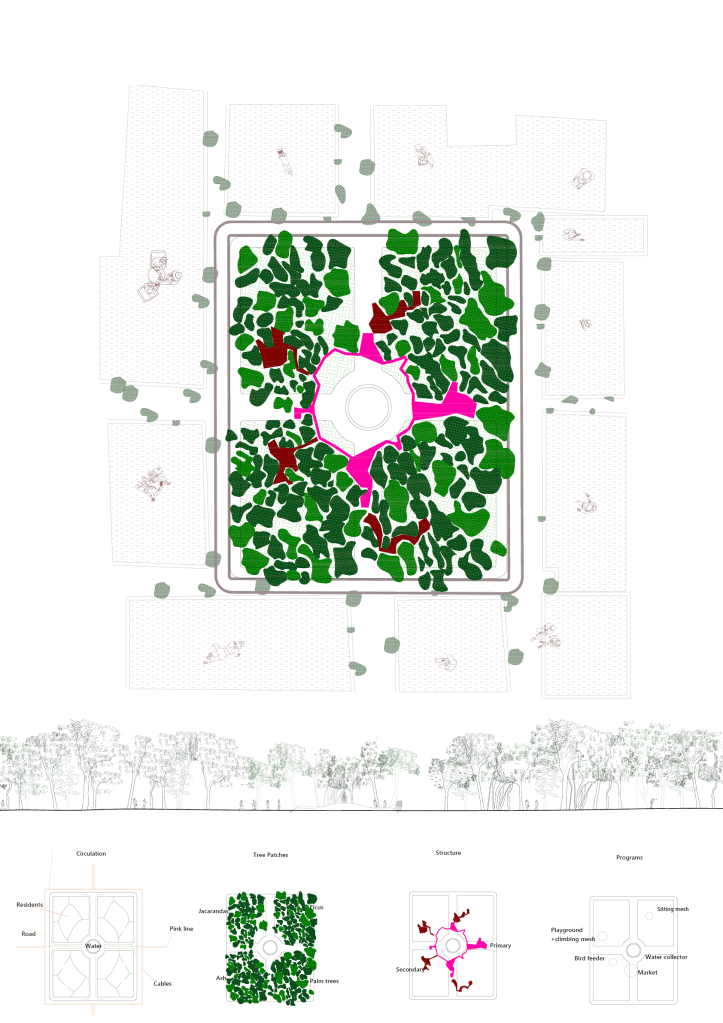
Plaza Río de Janeiro in Roma Norte, Mexico City, is a historic square known for its European charm and a bronze replica of Michelangelo’s David. Surrounded by Art Nouveau buildings. Today, Plaza Río de Janeiro serves as a popular recreational space for both locals and visitors. The plaza often hosts
bazaars featuring various design and food products, as well as exhibitions and cultural events, enhancing its role as a vibrant community hub.
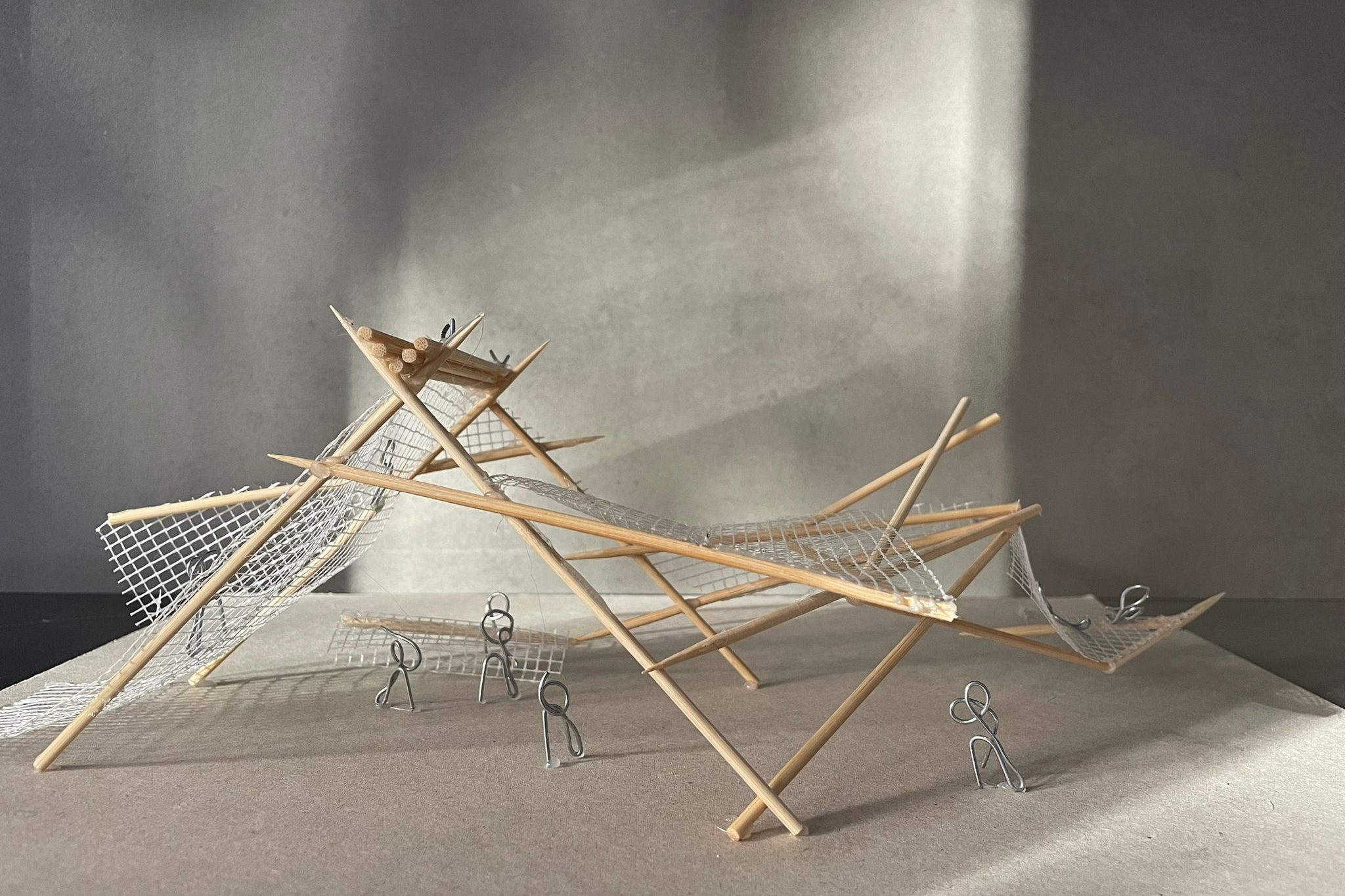
The architectural proposal for Plaza Río de Janeiro envisions a lightweight steel and textile structure
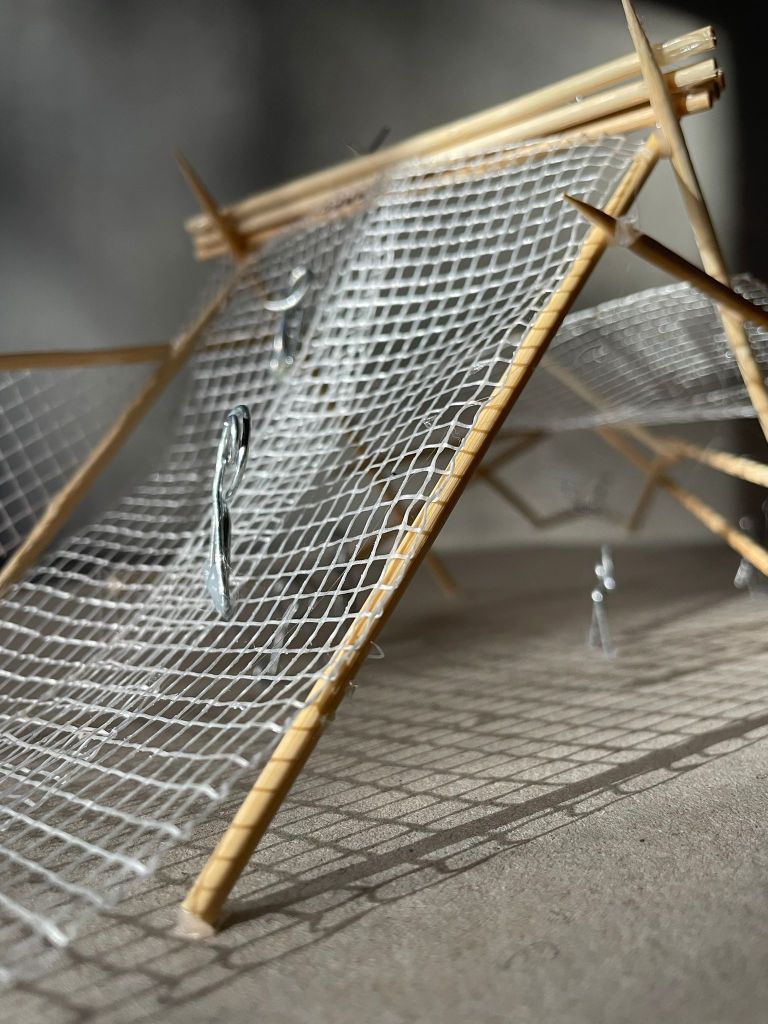
encircling the park, designed to host gatherings and social events while integrating nearby food stalls into a cohesive space. This structure will include shaded areas supported by tensile fabric canopies, providing comfort for visitors. A metal mesh framework will encourage climbing plants to grow, creating a lush, green environment that blends seamlessly with the park’s natural setting. This proposal enhances community interaction, supports local vendors, and fosters a sustainable urban ecosystem
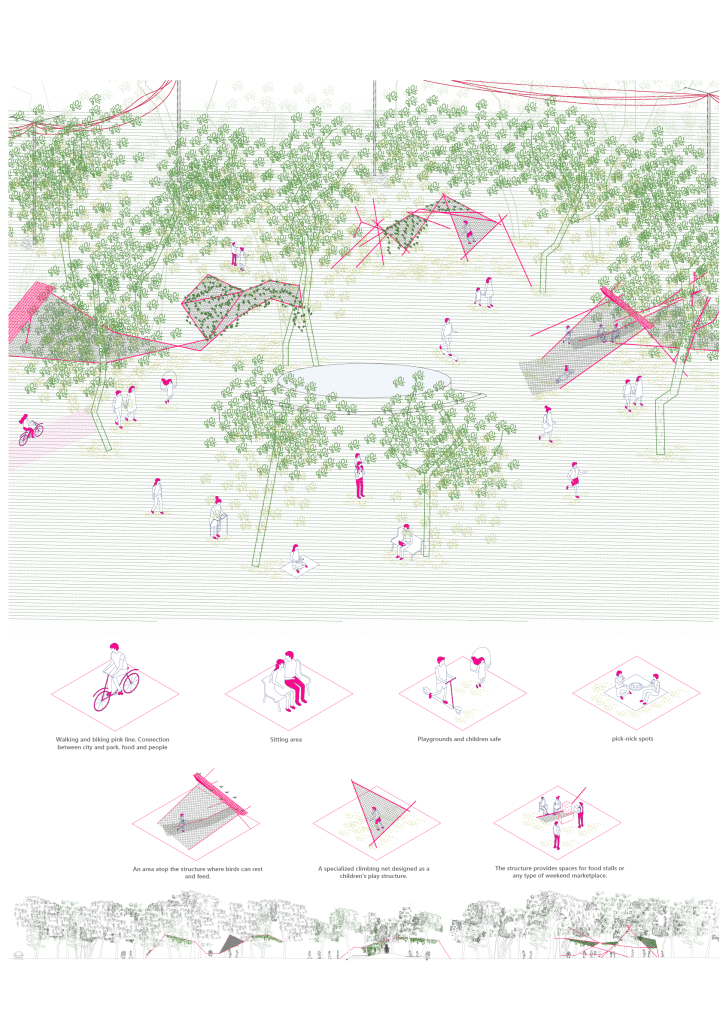
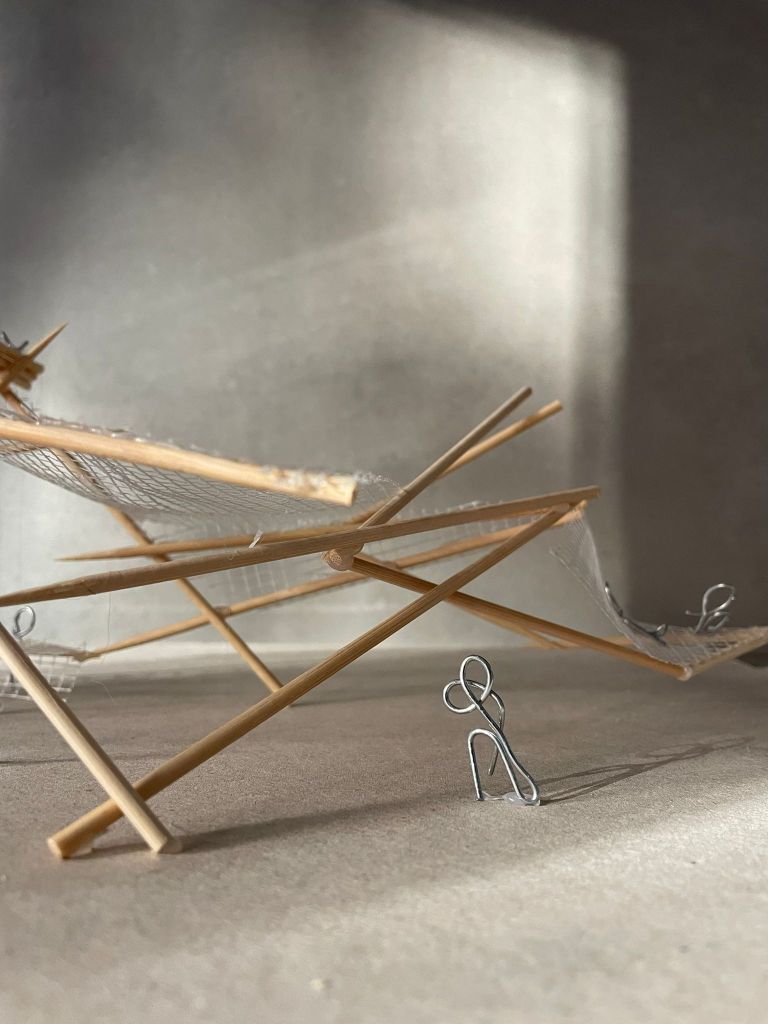
This park serves as a vibrant hub for community connection and recreation, seamlessly blending nature and urban life. It features a walking and biking pink line that links the city to the park, making it easily accessible for all. Visitors can enjoy serene sitting areas, safe playgrounds for children, and designated picnic spots perfect for families. Unique elements include a specialized climbing net for kids, a bird-friendly area atop the structure, and flexible spaces for food stalls or weekend marketplaces. The park is designed to foster interaction, relaxation, and sustainability, creating a welcoming space for people, food, and nature to thrive together. All these features are beautifully unified by a multifunctional structure that surrounds and defines the park. This innovative design not only provides a framework for the park’s various activities but also creates spaces that house
its many functions. The structure offers shaded sitting areas, and safe zones for children’s playgrounds and climbing nets. It extends upward to provide an elevated resting and feeding area for birds, blending sustainability with urban utility. Additionally, the structure hosts spaces for vibrant weekend marketplaces and food stalls, transforming the park into a lively hub of activity and interaction while maintaining its connection to nature and the city.
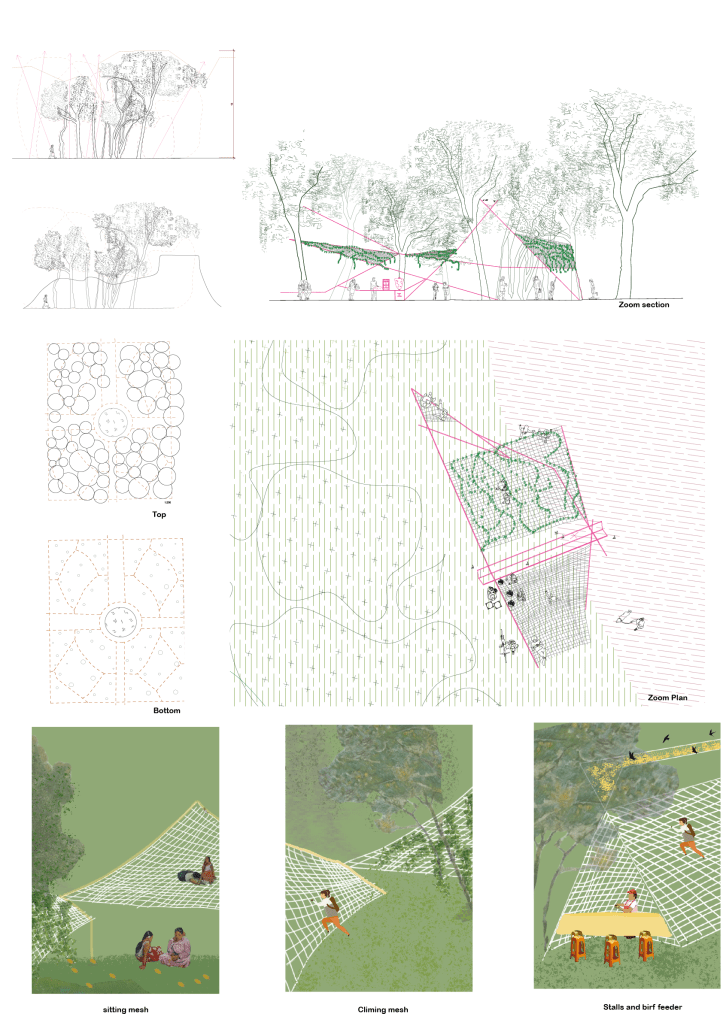
Tree analysis
After conducting an analysis of the trees in La Roma Norte, including their height and distribution, the structure of the neighborhood was designed based on these findings. The varying tree heights helped determine the layout and design of different areas. This tree-based design not only enhances the neighborhood’s aesthetic appeal but also ensures a harmonious balance between nature and the built environment.
 Portfolio